
Summary
IDH is a Netherlands-based organisation working to transform markets towards more sustainable and inclusive trade. IDH already had Microsoft 365 in place, but SharePoint was not yet working as a structured intranet: content was fragmented, search was unreliable, and every new site meant manual IT effort. We worked with IDH to design and implement an intranet built on native Microsoft 365 features, with the taxonomy, governance and automated site provisioning needed to make it usable day to day, together with a structured handover that left IDH able to manage and build on the platform themselves.
The challenge
The problem at IDH was not a lack of content or tooling. It was a lack of structure. SharePoint was available across the organisation, but there was no consistent model for how project, department or programme content should be organised. Without agreed taxonomy or metadata standards, search had very little to work with, and content that existed was difficult to find.
The operational side had the same issue. Creating a new site or managing access was a manual, inconsistent process that depended on IT involvement each time, and experiences like internal news and handbook-style content were underdeveloped. Left unaddressed, this kind of fragmentation compounds: every new ungoverned site makes search weaker and ownership harder to untangle later.
IDH needed a partner that could:
- design a SharePoint environment with proper information architecture and governance from the ground up
- introduce taxonomy, metadata and search improvements that would make content findable
- deliver scalable site and permissions patterns that teams could use without ongoing IT involvement
- provide training and handover that left IDH confident to manage and build on the platform themselves
If your SharePoint has grown without a taxonomy or governance model behind it, talk to our team about putting the structure in first.
Why start with taxonomy and information architecture?
The simplest route to a usable intranet is rarely the visual design. It is the structure underneath it. If the taxonomy is wrong, everything built on top of it inherits the problem: navigation stops matching how people think about their work, search filters return noise, and site templates encode the wrong assumptions. So the first step was to define that structure properly.
We ran taxonomy and information architecture workshops with IDH's internal communications and IT teams to understand how the organisation actually organises and navigates its content, whether by project, by department or by programme. The decisions made in those workshops shaped everything downstream: the navigation model, the search experience, and the templates every new site would be built from.
From there, the work moved through design, configuration, and a structured UAT and handover phase. The IDH team was involved at each stage, which matters more than it sounds: the people who validate the environment during UAT are the same people who need to run it afterwards.
What was delivered
The solution is a SharePoint intranet built using native Microsoft 365 features, deliberately practical and maintainable rather than bespoke or dependent on specialist support to manage. The key components:
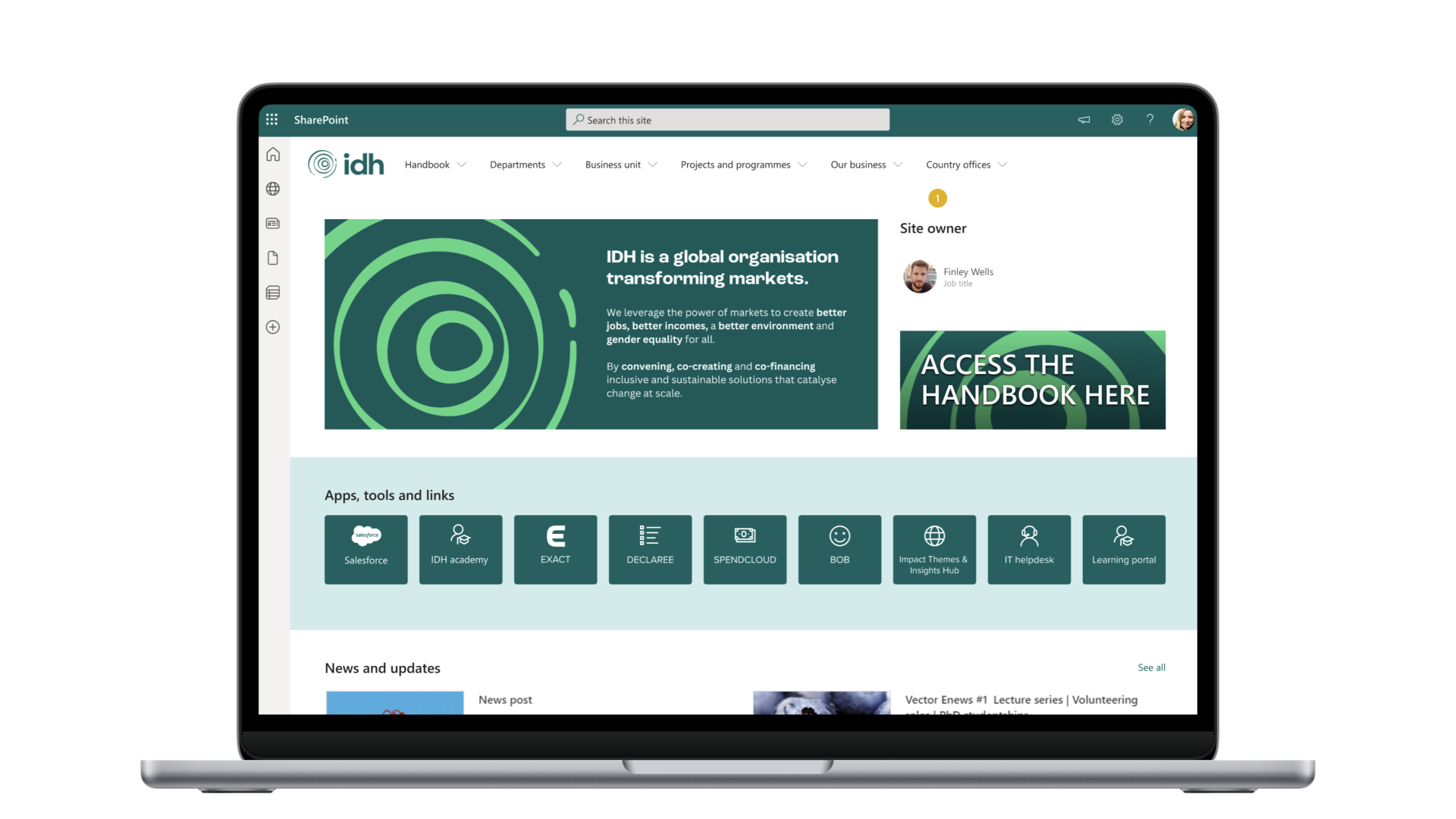
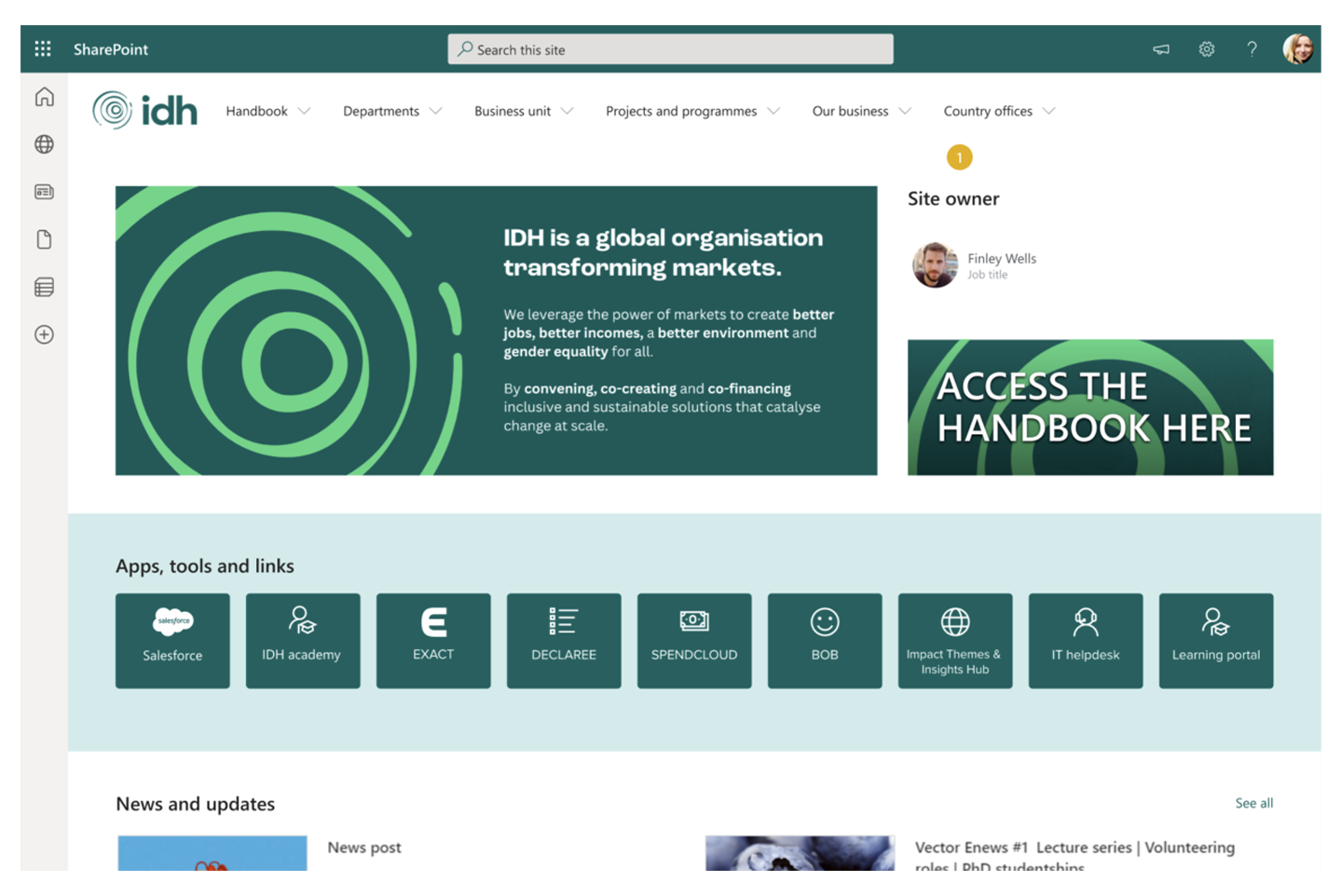
- A custom homepage and search page with enhanced filters and audience-targeted navigation, informed directly by the taxonomy work. In practice, this means people find content by how IDH thinks about its work, not by knowing in advance where a document happens to live.
- Three reusable page templates for projects, departments and folder pages. Teams get a consistent, structured starting point for new sites instead of designing from a blank page, which is where inconsistency usually creeps back in.
- Automated site creation templates with the right structure and permissions already in place. New sites can be created consistently without a manual IT request each time. The governance is baked into the template rather than enforced by hand.
- A handbook site, standardised library structures and a permissions provisioning page, giving IDH cleaner access management and clear content ownership, and extending the platform well beyond basic document management.
Curious how we approach information architecture for a SharePoint? Explore our design and IA services.
Why it mattered
For IDH, the goal was never simply to have a SharePoint intranet. It was to have one that teams would actually use. That is a structural outcome, not a cosmetic one. The information architecture, the search experience and the site creation patterns all had to work together so that navigating the environment feels natural day to day.
Two things made the difference. The first was bringing IDH's communications and IT stakeholders together around a shared vision for the platform, so the structural decisions hold because both sides own them. The second was building for self-sufficiency: because the solution uses native Microsoft 365 capability with governance built into the provisioning patterns, IDH can create sites, manage permissions and grow the platform without depending on us or on specialist support.
The result is a SharePoint environment designed around how IDH works, rather than a generic deployment shaped around what SharePoint offers out of the box. If your SharePoint environment has grown without structure, the route IDH took, taxonomy first, then design, then governed provisioning, is a workable one for most organisations.